
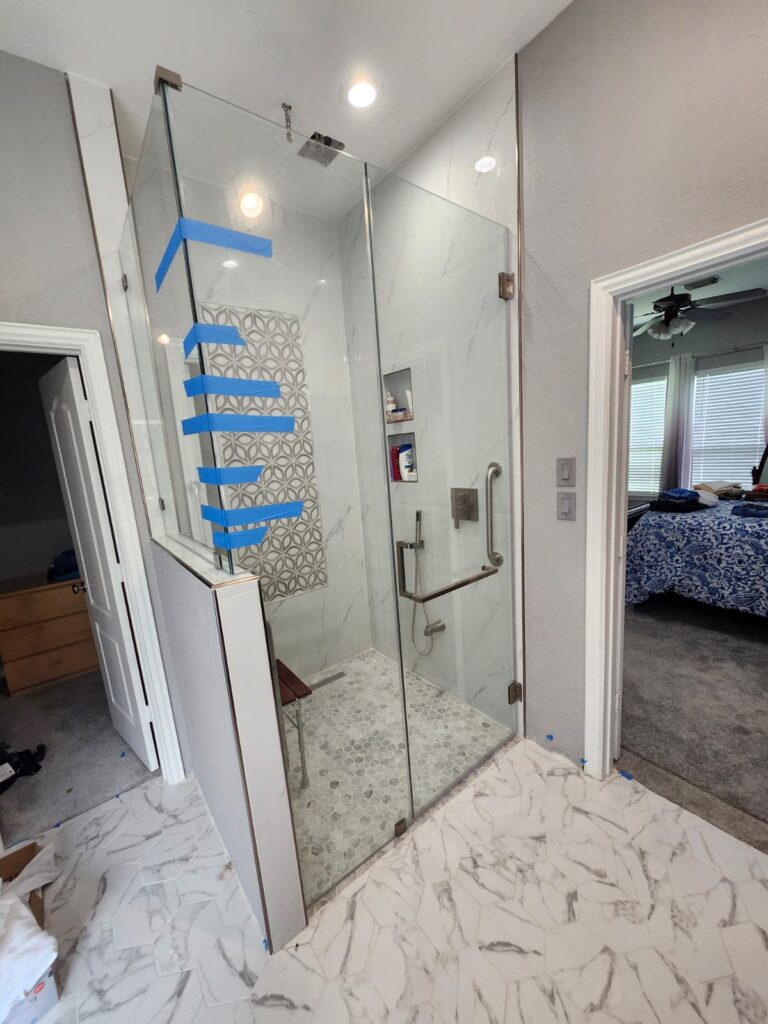
Choosing a new shower is not just about looks. It affects your daily routine, your bathroom space, your cleaning habits, and even your home’s resale value. If you are stuck between shower cubicles and walk-in showers, you are not alone. This is one of the most common questions homeowners ask before a bathroom renovation.
In this guide, we break down the real differences between the two, based on practical installation experience and common questions homeowners ask us every week. By the end, you will know exactly which option fits your space, budget, and lifestyle.
Shower cubicles are the better choice if you want a fully enclosed, splash-free shower in a smaller bathroom. Walk-in showers work best in larger bathrooms where an open, doorless design is preferred for accessibility and a modern look. Your final choice depends on space, budget, and how much water containment you need.
What Is a Shower Cubicle?
A shower cubicle is a fully enclosed shower unit with glass or acrylic panels and a door. It creates a separate, self-contained space that keeps water inside, away from the rest of the bathroom.
Shower cubicles typically include:
- A base or tray to catch water
- Enclosed walls on three or four sides
- A hinged, sliding, or pivot door
- A watertight seal around the frame
This setup is popular in homes where the bathroom floor is not fully waterproofed, since the enclosure does the job of containing water.
What Is a Walk-In Shower?
A walk-in shower is an open shower space, usually without a door. It often has one or two glass panels and a wide entry point, so you can step in directly without stepping over a threshold.
Walk-in showers rely on:
- A sloped floor that drains water toward one point
- Waterproof wall and floor materials
- A wide, open entrance
- Sometimes a small glass panel to reduce splashing
This design is popular in modern homes and is often chosen for its clean, spa-like appearance.
How Do Shower Cubicles and Walk-In Showers Compare?
Here is a side-by-side look to make the comparison easier.
| Feature | Shower Cubicles | Walk-In Showers |
|---|---|---|
| Water containment | Excellent, fully enclosed | Good, but needs proper drainage slope |
| Space needed | Works in small to medium bathrooms | Best in medium to large bathrooms |
| Accessibility | Moderate, has a door and sometimes a small step | High, no door or step, easy for wheelchairs |
| Installation cost | Moderate | Higher, due to waterproofing and flooring work |
| Cleaning | Glass and tracks need regular wiping | Fewer corners, generally easier to clean |
| Style | Classic, boxed-in look | Modern, open, minimalist look |
| Resale appeal | Strong in traditional homes | Strong in modern and luxury homes |
Why Do Shower Cubicles Work Well in Smaller Bathrooms?
Space is the biggest reason homeowners choose shower cubicles over an open design. A cubicle contains water within its own frame, so you do not need to waterproof the entire bathroom floor. This makes it a practical option for apartments, guest bathrooms, and older homes with limited plumbing changes.
We have installed shower cubicles in bathrooms as small as 30 square feet, and they still function well because the enclosure does most of the work in keeping water where it belongs.
Another reason people prefer cubicles is privacy and steam control. Since the space is enclosed, steam stays inside, which helps warm up faster during colder months.
Why Do Homeowners Choose Walk-In Showers?
Walk-in showers appeal to homeowners who want an open, modern feel. Removing the door and frame creates a sense of extra space, even if the actual square footage stays the same.
Common reasons people choose walk-in showers include:
- Easier access for elderly family members or anyone using a wheelchair
- A cleaner, more minimalist bathroom look
- Less hardware to maintain, since there is no door or track
- A higher-end, resort-style feel
The tradeoff is that walk-in showers need careful waterproofing and a properly sloped floor. Without this, water can spread outside the shower area.
When Should You Choose Shower Cubicles Over Walk-In Showers?
Choose shower cubicles if any of these apply to you:
- Your bathroom is under 40 square feet
- You are renovating on a moderate budget
- You want to avoid major floor waterproofing work
- You prefer a defined, private shower space
- You are renting or plan to sell the home in the traditional housing market
When Should You Choose a Walk-In Shower Instead?
A walk-in shower makes more sense if:
- Your bathroom has enough open floor space, generally 60 square feet or more
- You want a barrier-free design for accessibility
- You are doing a full bathroom remodel and can invest in proper waterproofing
- You want a modern, high-end look for resale value
- You already have or plan to install heated flooring, which works well with open layouts
How Much Do Shower Cubicles and Walk-In Showers Cost?
Pricing varies based on materials, glass type, and labor in your area, but here is a general comparison based on typical installation projects.
| Cost Factor | Shower Cubicles | Walk-In Showers |
|---|---|---|
| Unit or panel cost | Lower to moderate | Moderate to high |
| Labor and installation | Moderate | Higher, due to floor slope and waterproofing |
| Long-term maintenance | Low to moderate | Low |
| Renovation disruption | Minimal | Can involve floor demolition |
If your budget is tight, shower cubicles usually offer a faster, less invasive installation. If you are planning a full remodel anyway, the added cost of a walk-in shower may be worth it for the long-term look and function.
How Do You Decide Which One Fits Your Bathroom?
Ask yourself these three questions before deciding.
1. How much space do I actually have? Measure your bathroom floor first. If you are working with a small footprint, a cubicle will almost always perform better.
2. Am I renovating the whole bathroom or just the shower? If you are only replacing the shower and want to avoid touching the floor, a cubicle is simpler. If you are redoing the whole room, a walk-in shower becomes more realistic.
3. Do I need it to be accessible? If accessibility is a priority now or in the future, a walk-in shower with no threshold is generally the safer long-term choice.
Real-World Example: Two Homeowners, Two Different Choices
A client with a small guest bathroom in an older home chose a framed glass cubicle. The existing floor could not be easily waterproofed without major renovation, so the enclosed cubicle solved the problem without tearing up tile.
Another client remodeling a master bathroom from scratch chose a frameless walk-in shower with a sloped floor. Since the whole bathroom was already being rebuilt, adding proper drainage was not an extra burden, and the open design matched the modern style of the rest of the home.
Both choices were correct for their situations. Neither option is universally better, it depends on the starting point of your bathroom.
What Maintenance Does Each Option Require?
Shower cubicles need occasional attention to:
- Door tracks and hinges, which can collect soap residue
- Seals around the frame, which should be checked yearly
- Glass panels, which need regular wiping to prevent water spots
Walk-in showers need attention to:
- The drain, which should stay clear of hair and debris
- Grout lines on the sloped floor, which should be sealed periodically
- Glass panels, if present, wiped down after use
Neither option is high maintenance, but walk-in showers generally have fewer moving parts to worry about.
Frequently Asked Questions
Are shower cubicles cheaper than walk-in showers? Yes, in most cases. Shower cubicles usually cost less to install because they do not require extensive floor waterproofing or a sloped drainage system, which walk-in showers typically need.
Can I install a walk-in shower in a small bathroom? It is possible, but not always practical. Walk-in showers generally need more open space to work well without water splashing outside the shower area. In smaller bathrooms, a cubicle is usually the more functional choice.
Do shower cubicles trap more heat than walk-in showers? Yes, since shower cubicles are fully enclosed, they hold in steam and heat better than open walk-in designs. This can make a big difference in colder climates.
Which option is better for elderly family members? Walk-in showers are generally safer for elderly users or anyone with mobility concerns, since they have no door, no track, and often no raised threshold to step over.
How long does it take to install a shower cubicle? Most shower cubicles can be installed in one to two days, depending on plumbing and whether the existing base is being reused. Walk-in showers often take longer due to floor prep work.
Can I convert a walk-in shower back into a cubicle later? Yes, this is possible, though it usually requires adding a door, frame, and sometimes adjusting the water containment setup. It is easier to plan ahead for the option you want long term.
Do walk-in showers need a glass panel? Not always, but most homeowners add at least one panel to reduce water splashing onto the bathroom floor, especially near the showerhead.
Final Thoughts
There is no single right answer between shower cubicles and walk-in showers. Cubicles are practical, budget-friendly, and ideal for smaller or older bathrooms. Walk-in showers offer a modern, open feel and better accessibility, but they need more space and proper waterproofing to work well.
The best choice comes down to your bathroom size, your budget, and how you plan to use the space day to day.
If you are ready to explore your options, the team at Creative Glass and Mirror can help you measure your space, compare materials, and find the shower setup that actually works for your home. Reach out today to get started on a shower that fits your bathroom and your lifestyle.