
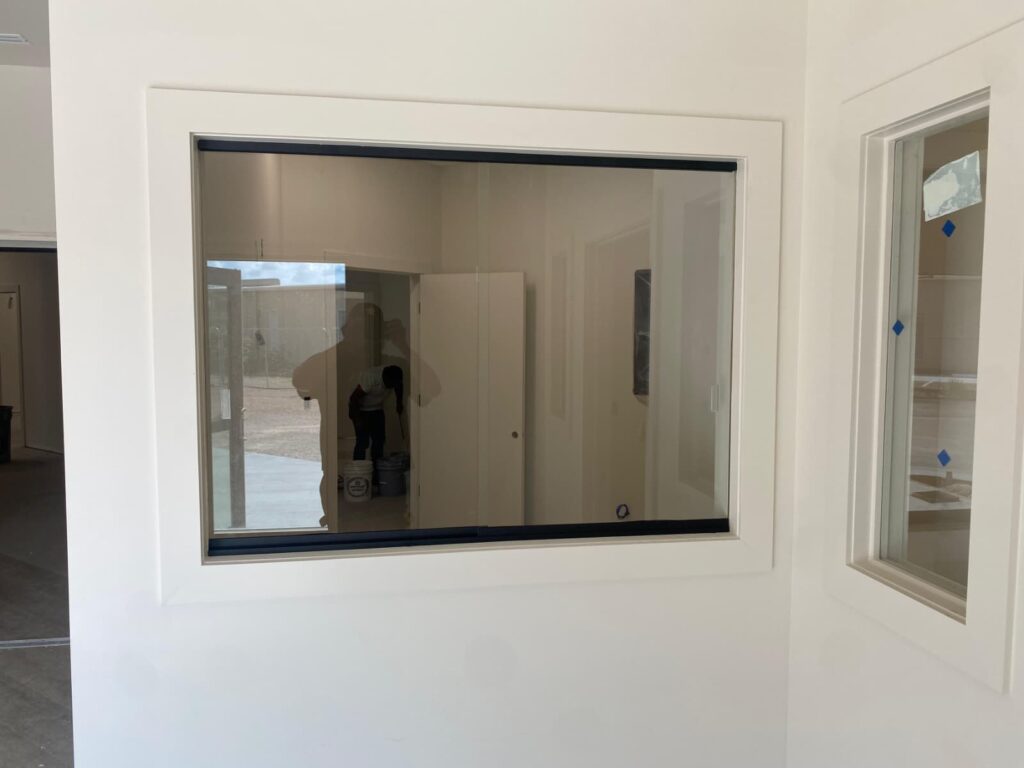
Whether you’re upgrading a bathroom, creating an accent wall in your living room, or installing a statement piece in your office lobby, custom mirrors can completely transform a space. They add depth, bounce light around, and honestly just make any room feel more finished.
Custom mirror installation involves measuring your space, ordering a mirror cut to your specifications, preparing the wall surface, and securing the mirror using appropriate mounting hardware or adhesive. The process typically takes 2–4 hours for professionals and requires specific tools like mirror clips, construction adhesive, or French cleats depending on the mirror’s size and weight. For mirrors over 25 pounds, professional installation is strongly recommended.
What Is Custom Mirror Installation?
Custom mirror installation is the process of fitting a made-to-order mirror to a specific wall space. Unlike off-the-shelf mirrors you’d grab from a home goods store, custom mirrors are:
- Cut to your exact dimensions
- Available in various shapes (not just rectangles)
- Often frameless or with custom framing options
- Designed to fit awkward spaces, corners, or floor-to-ceiling applications
Think of it like the difference between buying a suit off the rack versus getting one tailored. Both work, but one fits your space perfectly.
Who Needs Custom Mirror Installation?
| Setting | Common Applications |
| Residential Bathrooms | Vanity mirrors, medicine cabinet replacements, full-wall mirrors |
| Living Spaces | Accent walls, fireplace surrounds, entryway statements |
| Home Gyms | Wall-to-wall workout mirrors |
| Offices | Reception areas, conference rooms, executive bathrooms |
| Retail Spaces | Fitting rooms, display areas, salon stations |
Why Should You Consider Custom Mirrors Over Standard Options?
Here’s what I’ve learned from working with clients on interior projects: standard mirrors often create more problems than they solve.
The benefits of going custom include:
- Perfect fit — No awkward gaps or misaligned edges
- Design flexibility — Choose beveled edges, tinted glass, or antique finishes
- Space optimization — Mirrors cut to maximize light reflection in specific areas
- Professional finish — Clean, seamless look that adds property value
- Safety features — Options for tempered or shatterproof glass in high-traffic areas
What Tools and Materials Do You Need for Mirror Installation?
Before starting any custom mirror installation, gather these essentials:
Basic Tools
- Tape measure and level
- Stud finder
- Pencil for marking
- Power drill with appropriate bits
- Rubber mallet (for adjustments)
- Safety glasses and gloves
Mounting Materials (Choose Based on Method)
| Mounting Method | Best For | Materials Needed |
| Mirror Clips | Small to medium mirrors (under 20 lbs) | J-clips or Z-clips, wall anchors, screws |
| Construction Adhesive | Permanent installations, large mirrors | Mirror mastic, temporary supports |
| French Cleats | Heavy mirrors, easy removal | Cleat system, heavy-duty screws, studs |
| Channel Systems | Commercial installations, floor-to-ceiling | J-channel, U-channel, silicone |
How Do You Install a Custom Mirror? (Step-by-Step Guide)
Let me walk you through the complete process. I’m breaking this down into phases so you can tackle it methodically.
Phase 1: Planning and Preparation
Step 1: Measure twice (seriously, measure twice)
Use a tape measure to get the exact dimensions of your installation area. Account for:
- Any outlets or switches that need cutouts
- Distance from ceiling, floor, and adjacent walls
- Existing fixtures like sconces or towel bars
Step 2: Order your custom mirror
Provide your measurements to a glass company. Specify:
- Thickness (¼ inch is standard for most home applications)
- Edge finishing (polished, beveled, or seamed)
- Any special features (anti-fog coating, LED integration)
Step 3: Prepare the wall surface
The wall needs to be:
- Clean and dry
- Free of peeling paint or wallpaper
- Flat (use a level to check for bowing)
- Primed if using adhesive
Phase 2: Installation Day
Step 4: Mark your mounting points
Using your level and tape measure:
- Mark the top edge of where the mirror will sit
- Locate wall studs with a stud finder
- Mark clip or cleat positions (typically every 12–16 inches)
Step 5: Install mounting hardware
For mirror clips:
- Install bottom clips first, leaving ⅛ inch gap for the mirror to rest
- Install side clips loosely
- Top clips go on last after the mirror is in place
For adhesive installation:
- Apply mirror mastic in vertical strips (never horizontal—trapped air needs to escape)
- Use temporary supports to hold the mirror while adhesive cures (24–48 hours)
For French cleats:
- Mount wall cleat into studs
- Attach mirror cleat to the back of the mirror
- Hang mirror by interlocking cleats
Step 6: Place and secure the mirror
This is where having a helper matters. Large mirrors are awkward and heavy.
- Lift the mirror carefully (always carry vertically, never flat)
- Rest the bottom edge on lower clips or supports
- Tilt the mirror flush against the wall
- Secure top clips or verify adhesive contact
Step 7: Final adjustments and cleanup
- Check level one more time
- Tighten any loose clips
- Clean the mirror surface with glass cleaner
- Apply silicone caulk around edges if desired (prevents moisture intrusion in bathrooms)
When Should You Hire a Professional for Mirror Installation?
Look, I’m all for DIY when it makes sense. But custom mirror installation has some situations where calling a pro is the smart move:
Hire a professional when:
- The mirror weighs more than 25 pounds
- The installation is floor-to-ceiling
- You’re dealing with odd angles or curved surfaces
- The mirror requires electrical integration (LED, defogging)
- It’s for a commercial space with liability concerns
- You don’t have a helper available
Professional installation typically costs $50–$150 per hour, with most residential jobs taking 1–3 hours. That’s a small price for peace of mind when you’re dealing with heavy glass.
What Are Common Mistakes to Avoid During Mirror Installation?
I’ve seen these go wrong more times than I’d like:
- Skipping the stud finder — Drywall anchors have weight limits. Heavy mirrors need studs.
- Using regular construction adhesive — Standard adhesive can damage mirror backing. Always use mirror-specific mastic.
- Not accounting for wall imperfections — A bowed wall will crack a mirror over time. Address flatness first.
- Rushing the adhesive cure — Remove supports too early and the mirror slides. Wait the full 48 hours.
- Forgetting about electrical — Measure around outlets before ordering. Cutouts cost extra but beat discovering the problem on installation day.
- Ignoring weight distribution — Clips need to be evenly spaced. Uneven support creates stress points.
How Much Does Custom Mirror Installation Cost?
Budget expectations vary widely based on your project scope:
| Cost Component | Typical Range |
| Custom mirror (per square foot) | $8–$25 |
| Beveled edges | +$3–$8 per linear foot |
| Professional installation | $50–$150/hour |
| Mounting hardware | $15–$75 |
| Total for typical bathroom vanity (24″ x 36″) | $150–$400 installed |
| Total for large accent wall (4′ x 8′) | $400–$1,200 installed |
Frequently Asked Questions About Custom Mirror Installation
Can I install a custom mirror myself?
Yes, you can install a custom mirror yourself if it weighs under 25 pounds, you have a helper, and you’re comfortable using power tools. For heavier or larger mirrors, professional installation is safer and often required for warranty coverage.
How long does mirror installation take?
Most custom mirror installations take between 1 and 4 hours. A simple bathroom vanity mirror might take 30–45 minutes, while a large wall installation or gym mirror could take a full day including wall prep and curing time.
What’s the best way to mount a heavy mirror?
The safest method for heavy mirrors is a French cleat system anchored directly into wall studs. This distributes weight evenly and allows for easy removal if needed. For permanent installations, construction adhesive combined with mechanical fasteners offers maximum security.
Do I need to remove drywall to install a mirror?
No, you don’t need to remove drywall for standard mirror installation. However, if you’re doing a floor-to-ceiling installation or need to address significant wall imperfections, some drywall work might be necessary.
Can mirrors be installed on any wall surface?
Mirrors can be installed on most wall surfaces including drywall, plaster, tile, and concrete. Each surface requires different mounting approaches—drywall uses anchors or studs, tile needs special adhesive, and concrete requires masonry anchors.
How do I prevent a bathroom mirror from fogging?
You can prevent mirror fogging by installing an anti-fog mirror (with built-in heating element), applying an anti-fog coating, or installing a bathroom exhaust fan to control humidity. Some custom mirrors come with integrated defogging technology.
What thickness mirror should I choose?
For most home and office applications, ¼-inch thick mirrors are standard and work well. For very large installations or commercial use, ⅜-inch thickness provides additional stability. Anything under ¼ inch tends to distort reflections.
Summary: Your Custom Mirror Installation Checklist
Custom mirror installation transforms spaces when done right. Here’s your quick-reference checklist:
✓ Measure your space accurately (twice!)
✓ Order from a reputable glass company with your specifications
✓ Prepare the wall surface—clean, dry, and flat
✓ Choose the right mounting method for your mirror’s weight
✓ Use proper tools and safety equipment
✓ Have a helper for mirrors over 15 pounds
✓ Allow full cure time for adhesive installations
✓ Call a professional for anything over 25 pounds or floor-to-ceiling
Ready to Start Your Mirror Project?
Whether you’re tackling this as a weekend DIY project or hiring a professional, custom mirror installation is one of those upgrades that pays off immediately in both function and aesthetics. Start by measuring your space, researching local glass companies for quotes, and deciding whether the scope fits your skill level.
Have questions about your specific installation scenario? Drop them in the comments below—I’m happy to help you work through the details.