
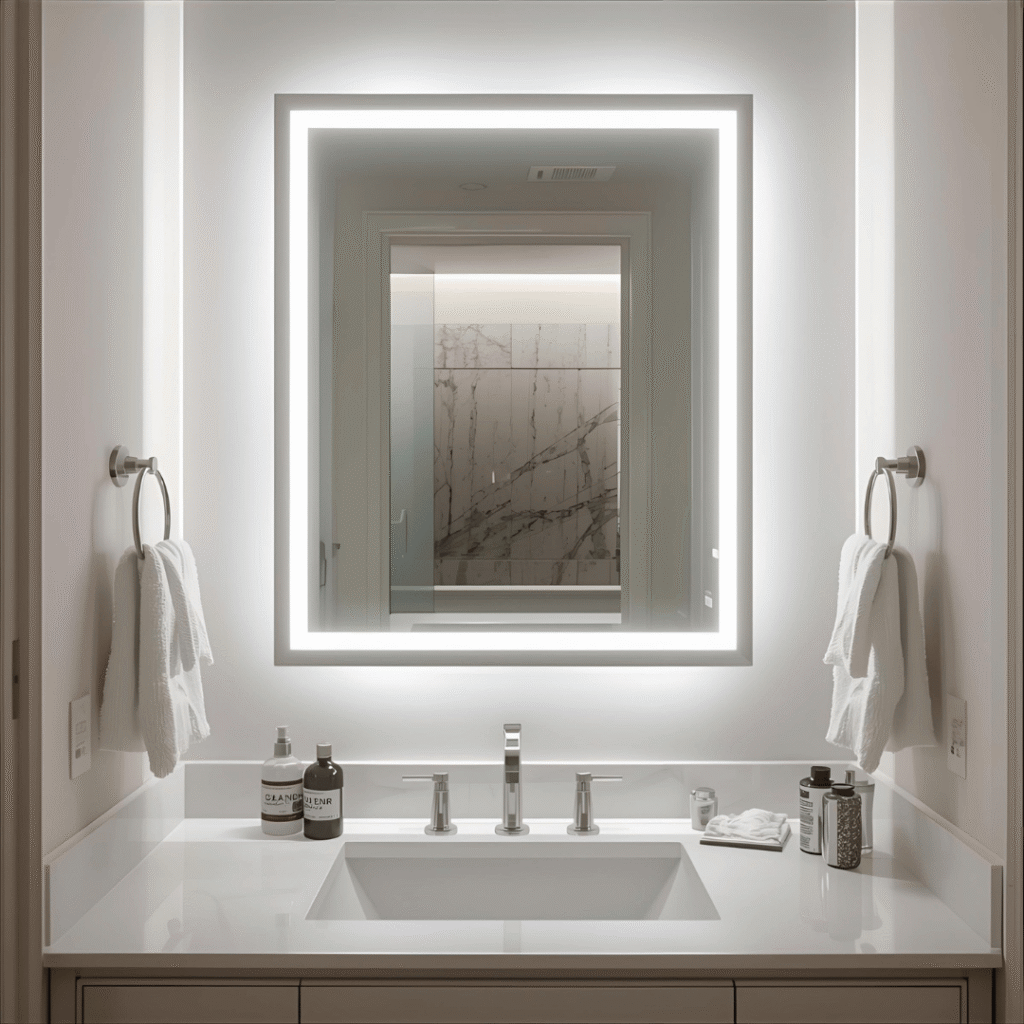
Installing a bathroom mirror seems straightforward until you’re staring at a crooked reflection or worse, hearing glass shatter against tile. After helping countless homeowners fix botched installations, I’ve seen the same preventable mistakes repeated over and over.
The most common bathroom mirror installation mistakes include choosing the wrong mounting hardware for your wall type, failing to locate studs properly, ignoring moisture considerations, hanging the mirror at incorrect heights, and rushing through measurements. These errors can result in fallen mirrors, cracked glass, water damage behind the mirror, and costly repairs that far exceed what a proper installation would have cost initially.
What Are the Most Common Bathroom Mirror Installation Mistakes?
Let me walk you through the errors I see most frequently. Each one is entirely avoidable with a bit of planning.
Not Identifying Your Wall Type First
Here’s something that trips up nearly everyone: different walls require different hardware.
| Wall Type | Recommended Hardware | Weight Capacity |
| Drywall (no stud) | Toggle bolts or wall anchors | 15-50 lbs |
| Drywall (into stud) | Wood screws | 50+ lbs |
| Tile over drywall | Tile-specific anchors | 25-40 lbs |
| Plaster | Plaster anchors or toggle bolts | 20-50 lbs |
| Concrete/brick | Masonry anchors | 50+ lbs |
I once watched a homeowner hang a 40-pound framed mirror using plastic drywall anchors rated for picture frames. Three weeks later, it crashed onto their granite countertop at 2 AM. That’s a mistake you only make once.
Skipping the Stud Finder Step
Studs are your best friends when mounting heavy mirrors. Yet many DIYers guess where they are or skip this step entirely.
How to properly locate studs:
- Use an electronic stud finder, moving slowly across the wall
- Mark both edges of each stud you find
- Verify by tapping the wall and listening for solid vs. hollow sounds
- Double-check with a small nail in an inconspicuous spot if needed
Ignoring Bathroom Moisture Issues
Bathrooms are humid environments. This matters more than most people realize.
Problems caused by moisture:
- Mirror backing deteriorates over time
- Adhesive bonds weaken and fail
- Mold grows behind the mirror
- Metal clips corrode and break
Always leave a small gap between the mirror and wall for air circulation, or use mounting hardware specifically rated for humid environments.
How Do You Measure Correctly for Bathroom Mirror Placement?
Measurement errors account for about 30% of installation problems I encounter. Here’s how to get it right.
What Height Should a Bathroom Mirror Be Hung?
The standard rule is centering the mirror at eye level, but bathrooms require additional considerations.
Quick height guidelines:
- Center the mirror 5-10 inches above the faucet
- Keep the bottom edge at least 4-6 inches above the countertop
- For vanity mirrors, aim for the center at approximately 57-65 inches from the floor
- Consider all household members’ heights when deciding
Why Do Width Measurements Matter?
Your mirror width should complement your vanity, not overwhelm or underwhelm it.
The proportion rule: Keep your mirror 2-4 inches narrower than your vanity on each side. A 48-inch vanity works best with a 40-44 inch wide mirror.
How Do You Account for Light Fixtures?
This is where many installations go wrong. I’ve seen beautiful mirrors installed directly behind where sconce lights needed to go.
Before drilling anything:
- Mark where existing light fixtures are located
- Check electrical box locations behind the wall
- Measure clearance needed for any new fixtures
- Consider how lighting will reflect off the mirror surface
What Tools and Materials Do You Actually Need?
Using the wrong tools creates problems before you even start mounting.
Essential Tools for Mirror Installation
- Stud finder (electronic preferred)
- Level (at least 24 inches long)
- Measuring tape
- Pencil for marking
- Drill with appropriate bits
- Screwdriver set
- Safety glasses
- Work gloves
Hardware Based on Mirror Type
For frameless mirrors:
- J-channel or L-clips
- Mirror adhesive (mastic)
- Plastic mirror clips with screws
For framed mirrors:
- D-rings or wire system
- Heavy-duty wall anchors
- French cleat systems for heavier pieces
Why Does Mirror Weight Matter So Much?
Underestimating mirror weight is probably the single biggest mistake I see.
How to Calculate Mirror Weight
Glass weighs approximately 3.3 pounds per square foot at 1/4-inch thickness. A standard 36×48 inch mirror weighs around 40 pounds before adding the frame.
Quick weight reference:
| Mirror Size | Approximate Weight (frameless) |
| 24″ x 30″ | 15 lbs |
| 30″ x 36″ | 22 lbs |
| 36″ x 48″ | 40 lbs |
| 48″ x 60″ | 66 lbs |
Always round up and choose hardware rated for at least 25% more than your mirror’s weight.
When Should You Hire a Professional Instead?
Not every mirror installation is a DIY project. Know your limits.
Signs You Need Professional Help
- Mirror weighs over 50 pounds
- Walls are plaster, concrete, or an unknown material
- Electrical work needs modification
- Mirror requires custom cutting
- Installation is above a bathtub (safety concern)
- You’re uncomfortable working at height
The real cost comparison: A professional installation typically runs $75-200. Replacing a shattered mirror plus damaged countertop easily exceeds $500-1000.
What Safety Precautions Should You Take?
Glass is unforgiving. These precautions aren’t optional.
Before Installation
- Wear safety glasses throughout the process
- Use work gloves when handling mirror edges
- Clear the work area of obstacles
- Have a helper for mirrors over 24 inches
- Inspect the mirror for existing chips or cracks
During Installation
- Never lean a mirror unsupported against a wall
- Keep children and pets away from the work area
- Support the full weight while securing hardware
- Don’t overtighten screws into glass clips
Frequently Asked Questions
Can you install a bathroom mirror with just adhesive?
You can use mirror adhesive (mastic) for lightweight mirrors under 20 pounds, but it’s best used in combination with clips or brackets for backup support. Adhesive alone fails over time in humid bathroom environments. I recommend always using mechanical fasteners as your primary mounting method.
How long should you wait before using a newly installed mirror?
If you used any adhesive during installation, wait at least 24-48 hours before putting stress on the mirror or hanging items from it. This gives the adhesive time to cure fully. For purely mechanical installations, you can use the mirror immediately.
Do frameless bathroom mirrors need special installation techniques?
Yes, frameless mirrors require J-channels, L-brackets, or clips specifically designed to grip glass edges without frames. You’ll need bottom support plus top clips that allow for glass expansion. Never rely solely on adhesive for frameless installations.
What’s the best way to remove an old bathroom mirror before installing a new one?
Score any adhesive behind the mirror using a utility knife or piano wire worked behind the glass. Wear heavy gloves and safety glasses. If the mirror is large, tape it in a grid pattern first to contain broken glass if it shatters. Work slowly from corners toward the center.
Can bathroom mirrors be installed directly over tile?
Yes, but you need tile-specific anchors and must drill carefully through tile using a carbide-tipped drill bit at low speed. Start with a small pilot hole. Water the bit periodically to prevent cracking. Avoid drilling into grout lines when possible, as anchors hold better in tile itself.
How do you fix a mirror that’s not hanging straight?
First, check if the issue is the mirror or the mounting hardware. Use a level against the mirror surface. If hardware is crooked, loosen screws slightly and adjust. For mirrors with wire hangers, the wire length may be uneven. Some clips have adjustment slots built in for fine-tuning.
Is it safe to install a mirror above a bathtub?
It’s legal but requires extra precautions. Use tempered safety glass rated for bathroom use. Ensure mounting hardware is rated for humid, wet environments. Some building codes have specific requirements, so check local regulations. Consider whether the installation height creates a falling hazard.
What causes mirrors to develop black edges over time?
Black spots along mirror edges indicate moisture damage to the backing. This happens when mirrors are installed without adequate air circulation behind them or when exposed to excessive humidity. Use mirrors with sealed edges for bathrooms and ensure proper ventilation during and after showers.
Summary
Successful bathroom mirror installation comes down to preparation and patience. Choose the right hardware for your specific wall type, measure twice before drilling once, account for bathroom humidity, and never underestimate mirror weight. When in doubt, invest in professional installation rather than risk injury or property damage.
Ready to tackle your bathroom mirror project? Start by identifying your wall type and gathering the proper tools. And if the job feels beyond your comfort level, there’s no shame in calling a pro. A perfectly hung mirror is worth getting right the first time.