

A bathroom mirror does far more than reflect your face. It shapes how light moves through the room, makes a small space feel larger, sets the visual tone of your entire bathroom, and anchors the vanity area in a way no other element can. Whether you are planning a full renovation or simply upgrading an outdated mirror, choosing the right one and getting bathroom mirror installation done correctly will transform the entire feel of your space. This guide walks you through every decision point so you arrive at a result you will love for years to come.
To choose the right bathroom mirror, measure your vanity width and select a mirror that is two to four inches narrower on each side. Consider the style of your bathroom, the lighting conditions, your storage needs, and whether you want a framed, frameless, or illuminated design. Professional bathroom mirror installation ensures secure mounting and a polished, long-lasting result.
What Size Bathroom Mirror Do You Actually Need?
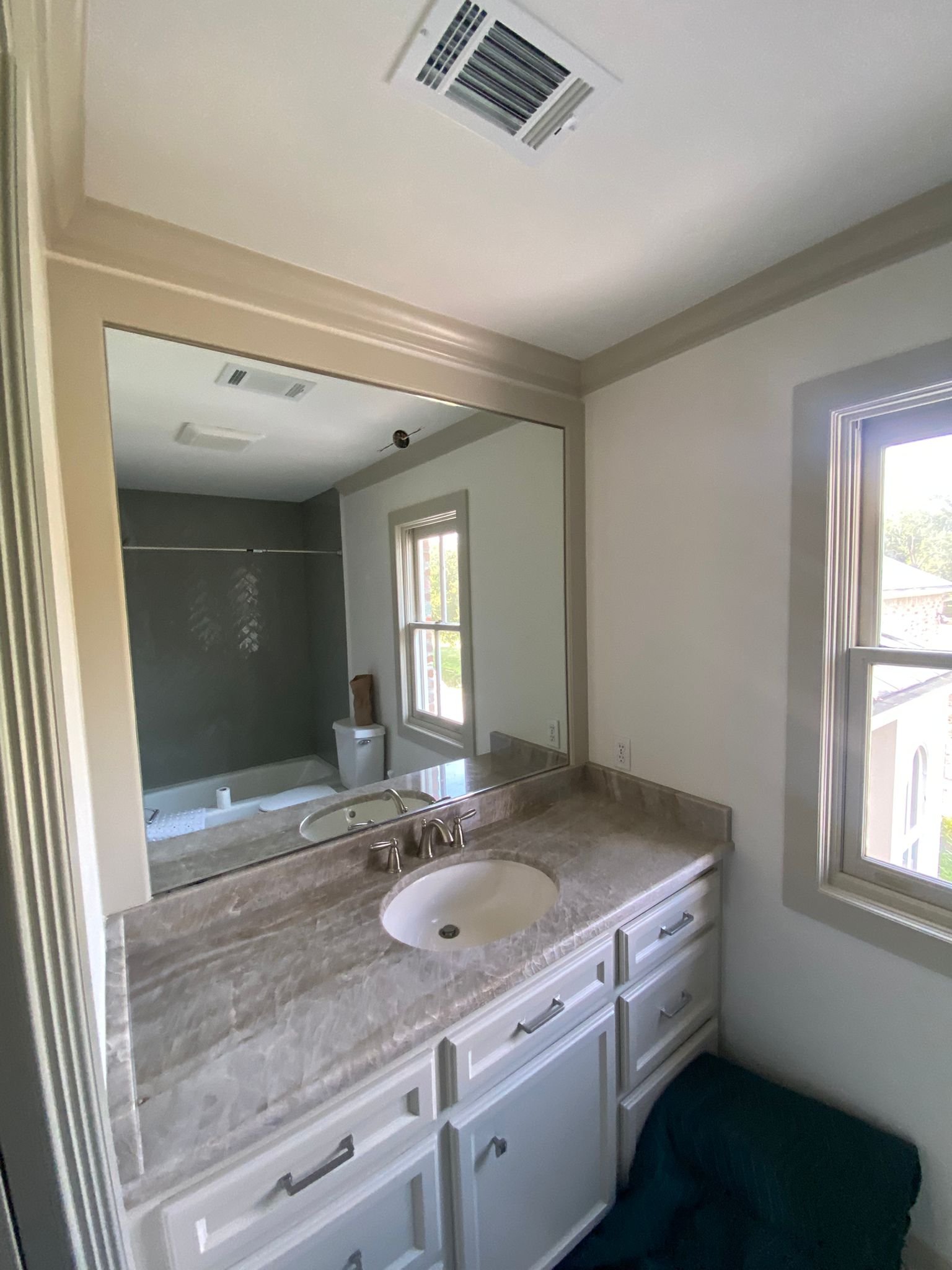
Size is the first decision you need to make, and it is also the one most people get wrong. A mirror that is too small looks awkward and leaves too much blank wall above the vanity. A mirror that is too wide crowds the space and clashes with the lighting fixtures on either side.
The general sizing rules that work for most bathrooms are as follows:
- Width: Your mirror should be two to four inches narrower than your vanity or sink cabinet on each side, so it sits comfortably within the visual boundary of the fixture below it
- Height: For a single-user bathroom, a mirror between 36 and 42 inches tall provides a comfortable reflection. For double vanities shared between two people of different heights, a taller mirror of 48 inches or more works better
- Clearance above the vanity: Mount the bottom edge of the mirror five to ten inches above the backsplash or countertop, which places the reflective surface at a practical height while leaving room for faucets and accessories
- Clearance below the ceiling: Leave at least six inches of space between the top of the mirror and the ceiling so the room does not feel cramped
In bathrooms with a double vanity, you have two options: one large mirror spanning the full width of both sinks, or two individual mirrors positioned above each sink. The two-mirror approach tends to look more deliberate and design-forward, while the single large mirror creates a seamless and expansive effect.
What Bathroom Mirror Style Suits Your Space?
Once you have your size requirements confirmed, the next decision is style. The mirror you choose should feel like a natural extension of your bathroom’s design language rather than an afterthought.
| Mirror Style | Best Bathroom Match | Key Characteristics |
| Frameless | Modern, minimalist, Scandinavian | Clean edges, maximizes perceived space, versatile |
| Wood or Natural Frame | Farmhouse, rustic, earthy contemporary | Warm tones, adds texture, suits neutral palettes |
| Metal Frame (Brass, Black, Chrome) | Industrial, transitional, glam | Strong visual statement, durable, trend-forward |
| LED Backlit or Lighted | Any modern bathroom needing task lighting | Built-in lighting, eliminates harsh shadows, energy efficient |
| Medicine Cabinet Mirror | Small bathrooms needing storage | Concealed shelving, practical, space-saving |
| Arched or Oval | Traditional, transitional, boho | Softens angular bathrooms, adds personality |
If you are unsure which style fits your bathroom, a helpful shortcut is to look at the finish on your faucets and cabinet hardware. A mirror frame in the same metal finish creates instant visual cohesion without requiring any additional design decisions.
Why Does Bathroom Lighting Affect Your Mirror Choice?
Lighting and mirrors are inseparable in a bathroom. The position and quality of your light sources determine how useful and flattering your mirror will be on a daily basis, and this directly influences which type of mirror you should select.
Overhead lighting alone creates downward shadows across your face that make grooming tasks harder and make you appear more tired than you are. Side-mounted sconces positioned at face height on either side of the mirror provide the most even, shadow-free illumination and are considered the gold standard for vanity lighting.
Consider these lighting-mirror combinations when planning your bathroom:
- Overhead lighting only: Choose a mirror with built-in LED strips around the perimeter or behind the glass to supplement the downward light with a forward-facing glow that reduces shadows
- Side sconces already installed: A simple frameless or framed mirror without built-in lighting works beautifully because the sconces are already doing the heavy lifting
- No natural light: An LED backlit mirror with adjustable color temperature lets you switch between warm and cool light, which is especially helpful in windowless bathrooms where the light never changes naturally throughout the day
- Abundant natural light: A large frameless mirror positioned to reflect the window source will bounce natural light deeper into the room and make the space feel significantly brighter and more open
How Does Professional Bathroom Mirror Installation Work?
Understanding the bathroom mirror installation process helps you plan properly and know what to expect from a professional installer. The method used depends on the mirror type, its weight, and the wall surface it is being mounted onto.
A professional installer typically follows this process:
- Wall assessment: The installer locates wall studs using a stud finder and assesses whether the mounting area has tile, drywall, or plaster, as each material requires a different anchoring approach
- Height and level marking: Precise measurements are marked on the wall using a spirit level to ensure the mirror sits perfectly horizontal regardless of any slight floor or ceiling irregularities
- Hardware selection: Mirrors mounted into studs use wood screws for maximum strength. Mirrors on tile or plaster walls without studs require appropriate wall anchors rated for the mirror’s weight
- Mounting bracket or clip installation: Framed mirrors typically use a French cleat or keyhole bracket system. Frameless mirrors use either J-channel clips along the bottom and side clips at the top, or a full adhesive application for lighter pieces
- Mirror placement and securing: The mirror is lifted onto its mounts and tested for stability, levelness, and clearance before any final adjustments are made
- Silicone sealing (where required): In high-moisture environments, edges are sealed with mold-resistant silicone to prevent moisture from getting behind the mirror and damaging both the backing and the wall
Attempting bathroom mirror installation without the right tools and anchoring knowledge is one of the most common causes of mirror damage and wall repairs. A mirror that is improperly secured is also a genuine safety risk, particularly in households with children.
When Should You Hire a Professional for Bathroom Mirror Installation?
Some homeowners feel confident handling small mirror installations themselves. However, there are specific situations where hiring a professional for bathroom mirror installation is not just recommended but essential.
- Large or heavy mirrors: Any mirror weighing more than 50 pounds requires professional installation to ensure the wall anchoring system can safely support the load long-term
- Frameless glass mirrors: These have no edge protection and require precise clip placement to distribute weight evenly across the glass surface without creating stress points that could cause cracking
- Tile walls: Drilling into ceramic or porcelain tile without the right drill bits and technique will crack the tile, leading to expensive repairs on top of the original installation cost
- LED or lighted mirrors: Mirrors with built-in lighting require electrical connections and should only be installed by someone qualified to handle both the structural mounting and the wiring safely
- Rental properties or commercial bathrooms: Professional installation provides documentation and assurance of structural integrity, which matters for landlord responsibilities and commercial liability
What Are the Most Common Bathroom Mirror Mistakes to Avoid?
Years of experience in the glass and mirror industry reveal the same mistakes appearing repeatedly. Knowing about them in advance saves you money, time, and the disappointment of having to redo the project.
- Choosing a mirror before measuring: Always measure your vanity width, the available wall height, and the distance to your light fixtures before shopping. Returning a large mirror is inconvenient and sometimes not possible
- Ignoring the mirror’s backing quality: In a humid bathroom environment, a mirror with a low-quality silver backing will begin to develop black spots around the edges within a few years. Look for mirrors with copper-free or protected backing specifically designed for bathroom use
- Mounting too high: A mirror positioned too high is uncomfortable to use and visually disconnected from the vanity below it. The center of the mirror should sit at approximately eye level for the primary users of that bathroom
- Skipping the level check: Even a slightly tilted mirror is immediately noticeable every time you use the bathroom. Always use a spirit level during installation and check it again after the mirror is fully secured
- Using standard adhesive in wet areas: Standard construction adhesives are not moisture-resistant and will fail over time in a bathroom. Only use mirror-specific mastic adhesive or mechanical mounting hardware for bathroom installations
Frequently Asked Questions About Bathroom Mirror Installation
How high should a bathroom mirror be mounted on the wall?
The ideal mounting height for a bathroom mirror places the center of the mirror at approximately eye level for the primary users, which for most adults means the center of the mirror should sit between 57 and 65 inches from the floor. The bottom edge of the mirror should be five to ten inches above the vanity backsplash. If multiple people of very different heights share the bathroom, a taller mirror positioned slightly lower accommodates everyone comfortably.
What is the best type of mirror for a small bathroom?
For small bathrooms, a large frameless mirror or a full-width mirror spanning the entire vanity creates the strongest illusion of depth and space. Frameless designs are particularly effective because they eliminate the visual boundary that a frame creates, allowing the reflective surface to blend seamlessly into the wall. Mirrored medicine cabinets are also an excellent choice for small bathrooms because they add storage without taking up any floor or counter space.
Can I install a bathroom mirror on a tiled wall?
Yes, bathroom mirror installation on a tiled wall is absolutely achievable but requires the right approach. Use a carbide-tipped or diamond-tipped drill bit specifically designed for tile, and apply light, steady pressure rather than forcing the drill. Apply tape over the drilling point first to prevent the bit from slipping across the tile surface. For heavier mirrors, it is strongly advisable to hire a professional to drill into tile, as cracking a tile during installation leads to expensive repairs that often exceed the cost of professional help from the start.
How long does bathroom mirror installation take?
A straightforward bathroom mirror installation for a standard framed or frameless mirror typically takes a professional installer between 30 minutes and one hour, including measuring, marking, drilling, anchoring, and final leveling checks. More complex installations involving lighted mirrors with electrical connections, very large frameless glass panels, or tiled walls with no existing stud access can take two to three hours. DIY installations often take longer because of unfamiliarity with the tools and process.
What is the difference between a framed and frameless bathroom mirror?
A framed mirror has a border of wood, metal, or composite material around the glass edge that adds decorative character and makes the mirror look more like a piece of furniture or art. A frameless mirror has polished or beveled glass edges with no surrounding material, creating a sleeker, more contemporary look. Frameless mirrors are generally easier to clean around the edges, while framed mirrors offer more design versatility and can be easier to hang using standard hardware. Both styles work equally well in bathroom environments when properly installed and made with moisture-resistant backing.
How do I stop my bathroom mirror from fogging up?
Mirror fogging happens when the warm, moist air from a shower or bath condenses on the cooler glass surface. The most effective long-term solution is a lighted mirror with a built-in demister pad, which is a thin heating element attached to the back of the glass that keeps the surface just warm enough to prevent condensation. Without a demister, you can apply a thin layer of shaving cream or a commercial anti-fog spray to the mirror surface and buff it off with a dry cloth. Improving bathroom ventilation with a properly sized exhaust fan also significantly reduces fogging throughout the entire bathroom.
How do I choose between a medicine cabinet and a flat mirror?
The choice between a recessed medicine cabinet and a flat mirror comes down to your storage needs and wall construction. If your bathroom lacks storage and the wall behind the vanity is not load-bearing or full of pipes, a recessed medicine cabinet is one of the most practical upgrades you can make. It provides concealed storage for everyday items while maintaining a clean visual profile. A flat mirror is the better choice when wall construction makes recessing impossible, when you already have adequate storage elsewhere, or when you want to maximize the visual impact of a larger mirror surface. Many homeowners work with a professional to assess the wall before committing to either option.
Summary: Getting Your Bathroom Mirror Choice Right the First Time
Choosing the right bathroom mirror comes down to four things working together: the correct size relative to your vanity, a style that reflects your bathroom’s design language, a lighting approach that makes the mirror genuinely functional, and a bathroom mirror installation method that keeps it secure, level, and beautiful for the long term.
Whether you are drawn to a sleek frameless panel, a warm wood-framed accent piece, or a feature-packed LED mirror with a built-in demister, the right choice is the one that fits your space, serves your daily needs, and is installed with the precision it deserves.
For expert guidance on selecting and installing the perfect bathroom mirror, the team at creativeglassandmirror.com is ready to help. With years of hands-on experience in custom glass and mirror solutions, they bring the expertise your bathroom project deserves. Reach out today and take the first step toward a bathroom that genuinely reflects your style.